

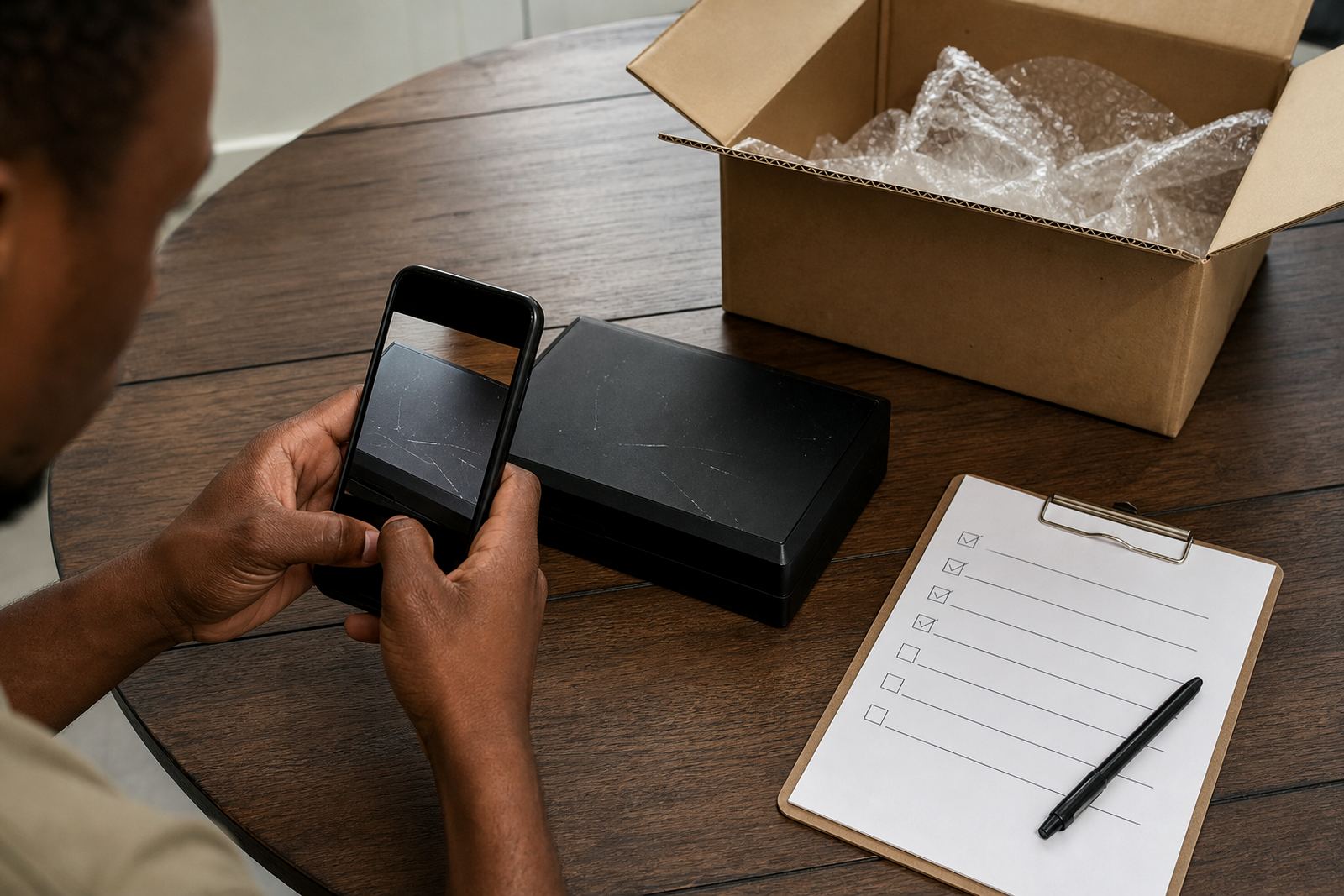
How Item Condition Review works in an escrow trade
Item Condition Review is used when a parcel, product or delivered item does not match the expected condition at handover. In a standard escrow payment flow, funds are held while the buyer checks the item against the agreed description, photos, packaging notes and delivery terms. If there is a dispute about dents, cracks, scratches, water damage, missing parts or poor workmanship, this service helps both sides gather the evidence needed before release or refund steps are considered.
We do not make decisions on behalf of the parties. Instead, we help structure the information so the matter can be assessed fairly and in order. That includes what was promised, what arrived, when it was received and what condition it was in at the time of opening. For online trades across Johannesburg, Cape Town, Durban, Pretoria and Gqeberha, that kind of record can save a lot of back and forth.
- Useful for sealed parcels, fragile goods, electronics, furniture, apparel and custom-made items
- Can be used where packaging was damaged or item condition differs from the listing or agreement
- Supports buyers, sellers and the dispute resolution process with clear evidence
What is included in the review support
This service focuses on evidence handling and condition review support, not technical testing or product repair. We help users understand what to submit and how to present it clearly. If a courier issue caused the damage, we can also help keep the timeline, packaging photos and handover notes in one place.
The goal is to make the record easy to follow. That matters for trades involving several boxes or items, and it also helps when one small part is missing but the main item is otherwise present. A clean evidence pack is often the difference between a quick resolution and a long argument that goes nowhere.
- Photos of outer packaging, inner packaging and the item itself
- Condition notes covering visible damage, wear, contamination or missing parts
- Timeline support for delivery, opening and first inspection
- Guidance on what to keep, such as labels, seals and accessories
- Help separating damage from normal use or pre-agreed wear
Step by step from delivery to evidence submission
Once the item has been delivered, the buyer should inspect it as soon as practical and within the agreed inspection window. If the item has obvious damage, it should be photographed before anything is cleaned, moved too much or repacked. That first set of images carries real weight because it shows the state of the item exactly as received.
Next, both sides should compare the item against the agreed listing, quotation or work order. If the problem is small but important, such as a missing charger, a broken fitting or a scuffed panel, the details should be written down plainly. We then help sort the evidence into a simple sequence: what was ordered, what arrived, what is wrong and what outcome is being requested.
- Receive and inspect the item within the agreed time frame
- Photograph the package, label, seals and item from several angles
- Record the issue in plain language, without guesswork
- Submit evidence through the contact page enquiry form
- Wait for review and next-step guidance from the support team
Turnaround times and when a matter should be raised
Turnaround depends on how complete the evidence is. A straightforward case with clear photos and a simple issue can move faster than a matter involving multiple items, courier damage and conflicting notes. In general, it is best to raise the issue on the same day as delivery or within the inspection period agreed in the trade. Waiting too long can make it hard to show when the damage occurred.
If the item is perishable, fragile or affected by heat and moisture, the review should be started promptly. Coastal humidity in places like Durban and Gqeberha can also affect packaging and certain finishes, so early photographs help a lot.
- Same day reporting is best where damage is visible on arrival
- Early reporting helps with courier investigations and item checks
- Late reporting may limit what can be confirmed from the evidence
Pricing approach and service scope
Pricing is handled case by case according to the amount of support needed, the number of items involved and the complexity of the evidence. A simple single-item matter needs less work than a mixed shipment with several accessories, boxes or separate conditions to assess. We do not publish fixed rates here, and no assumptions should be made until the enquiry has been reviewed.
The service is limited to condition review support, evidence organisation and guidance on the process around the disputed item. It does not replace a product warranty, an independent technical inspection or any legal process. If a trade has special conditions, those should be checked against the original agreement before any decision is made, because the exact terms matter more than anyone's memory after the fact.
- Single item and multi-item matters can be quoted differently
- Charges may vary by complexity and the amount of follow-up needed
- Any fees, registration details or compliance questions should be checked directly with the provider
Evidence quality and repeat checks
Good evidence does not start only after a problem appears. It starts before dispatch with clear item photos, a clean packing record and a proper description of condition. For sellers, that means checking the item before packaging, noting any pre-existing marks and keeping a simple internal record. For buyers, it means opening the parcel carefully and keeping the original packaging until the matter is settled.
For regular traders, it helps to review your packing and handover process every few months, especially if you are sending items in winter rain, summer heat or through longer courier routes. A quick check of your inspection steps every 90 days is practical for most online traders. Businesses handling repeated shipments may prefer monthly checks on their photo record, packaging method and condition notes so the same issue does not keep showing up.
- Keep pre-dispatch photos and packing notes for every trade
- Review inspection steps every 90 days or after any disputed delivery
- Store labels, courier slips and accessory lists until the escrow matter is closed
TrustIn works with buyers and sellers across South Africa from our Sandton base, helping keep condition disputes organised and clear. If you need support, send the details through the support form on our contact page and the team will guide the next step.
Deal summary
| Service type | Escrow condition dispute support |
|---|---|
| Typical use | Items received in disputed condition |
| Coverage | Johannesburg, Cape Town, Durban, Pretoria, Gqeberha |
| Intake method | Enquiry form on contact page |
| Review focus | Photos, packaging, delivery timing and item condition |
| Service team | Operations, buyer support, seller support and dispute resolution |