

How Solar Kit Escrow Works For Equipment Orders
Escrow is a simple payment arrangement for bigger purchases. The buyer pays into the escrow process, the funds are held while the kit is delivered and inspected, then payment is released to the seller once the agreed checks are complete. That gives both sides a clear step between order and final settlement.
This is useful for solar equipment because a kit often includes more than one item and small differences matter. A 5 kW inverter is not the same as an 8 kW unit, and a battery that looks fine on paper may not match the required voltage or cycle rating for the job. If you are using any payment provider, check that it is properly registered and suitable for the service being offered.
- Payment is held until the buyer confirms delivery or the inspection period ends.
- Release happens after the agreed condition, quantity and accessories are checked.
- If there is a problem, the transaction can move into a dispute review before release.
Kit Sizes And Options To Match The Job
Solar kit orders come in many sizes, from small backup sets for a home office to larger systems for a family house, small shop or light workshop. A compact kit may include 1 to 2 panels, a small inverter and a single battery. A larger package may include 4 to 8 panels, a hybrid inverter, lithium storage, mounting rails, isolators and monitoring gear.
In coastal areas such as Cape Town, Durban and Gqeberha, corrosion resistance and sealing matter more because salt air and humidity can shorten the life of poor fittings. For Pretoria and Johannesburg, roof heat and dust are also worth planning for.
- Typical home backup kits: 3 kW to 5 kW inverter, 1 battery, 4 to 6 panels.
- Mid-size systems: 5 kW to 8 kW inverter, 1 to 2 batteries, 6 to 10 panels.
- Key options: lithium or lead-acid storage, roof or ground mounting, single-phase or three-phase supply.
Where A Solar Escrow Arrangement Suits Best
This product suits online trades where the buyer cannot collect the kit in person or where the parts are coming from different places. It is useful for homeowners, installers, small contractors and resellers working across Johannesburg, Cape Town, Durban, Pretoria and Gqeberha. It can also help when a deal includes a deposit, staged delivery or a final balance due after testing.
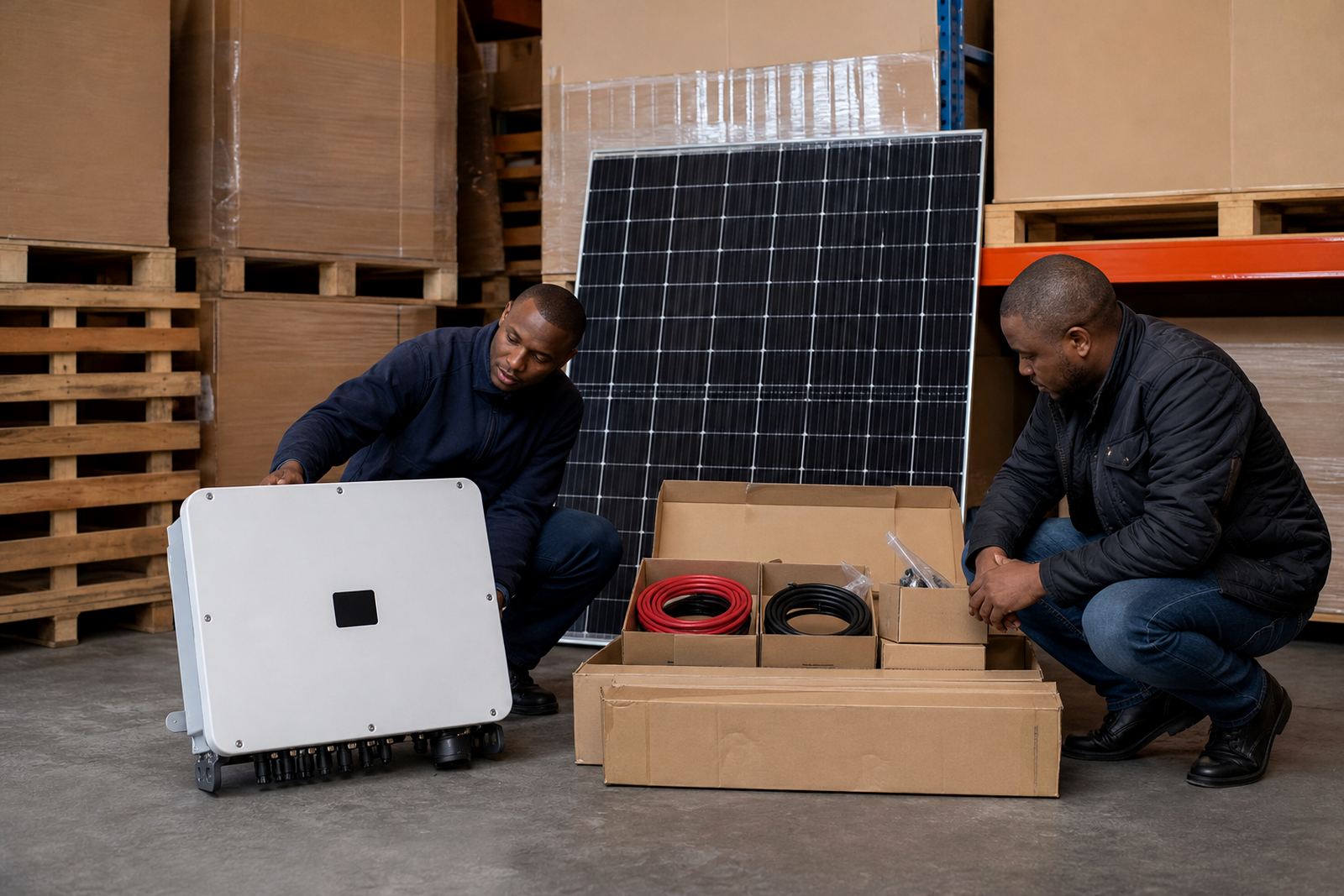
Solar equipment often needs a careful handover. Panels should arrive without cracked glass, inverters should match the quoted model and battery packs should be correctly labelled. Escrow gives the buyer time to confirm these points before the seller is paid. It is not legal advice or financial advice, just a common way to reduce risk in a trade.
- Best for higher-value kit orders where mistakes are costly.
- Useful when delivery happens in stages, such as panels first and batteries later.
- Good for distance trading where the buyer and seller are not meeting at the same site.
Getting a deal started
For most homes, the install needs wall space for the inverter, a dry ventilated area for batteries, and a roof or yard area with enough sun. On windy coastal sites, mounting must be fixed properly, and in areas with municipal rules or body corporate controls, the mounting position may need approval first.
- Check inverter capacity, battery size and panel count before payment is released.
- Confirm the roof type, cable length and switchboard space before ordering.
- Ask whether the kit includes isolators, breakers, mounting rails and monitoring gear.
How the escrow steps work
A solar kit lasts longer when it is kept clean and checked regularly. Dust on panels reduces output, so a gentle wash when needed helps, especially in dry inland areas. Batteries should stay within the recommended temperature range and should not be left with loose terminals. In coastal towns, check for corrosion on brackets and fixings, because salt and moisture can cause trouble over time.
Cables should be secure, vents should stay open, and the display or monitoring app should be checked for warning lights or unusual readings. If the system was installed during a rush, the first month is a good time to tighten, test and review the setup.
- Inspect panels for cracks, hot spots and dirt build-up.
- Service the system at the intervals recommended by the installer or equipment maker.
What To Check Before Ordering Solar Equipment
Before you place the order, compare the written quote against the actual kit contents. A solar bundle can look complete but still miss mounting parts, battery cables, protection devices or the correct connectors. Check the wattage of each panel, the inverter output, the battery chemistry and the warranty terms. If the order is for a business premises, also confirm whether the kit supports the required load and whether the board can carry the added demand.
TrustIn Solar Kit Escrow is built for a careful handover. The idea is simple: funds stay held while the buyer checks the delivery, the condition and the accessories, then payment is released when the order matches what was agreed. That helps both sides trade with a bit more confidence, especially when the kit is travelling across cities or provinces.
- Match the quote to the model numbers, quantity and accessories.
- Confirm delivery address, installation date and inspection period in writing.
- Check that the provider is properly registered before you pay any deposit.
Support For Delivery And Inspection Queries
If a solar kit arrives with missing accessories, the wrong item, or a delivery delay, the escrow process can move into support before funds are released. TrustIn assists with delivery check support, item condition review, missing accessories help, wrong item support, incomplete work review, scope difference help, milestone delay support, inspection period guidance, evidence submission help, refund process support, release query support and courier issue help. Our base is in Sandton, Johannesburg and support is available for buyers and sellers across South Africa.
For an escrow deal, write to TrustIn through the contact page form with your item, price and the other party, which keeps the process neat and traceable. That is especially useful when the order includes several boxes, a split delivery or a site handover that needs to be checked carefully.
Deal summary
| Payment flow | Funds held until delivery is confirmed, then released after agreed checks |
|---|---|
| Suitable orders | Solar panels, inverters, batteries, mounting gear and related accessories |
| Typical kit sizes | Small home backup to larger multi-component systems |
| Coverage | Johannesburg, Cape Town, Durban, Pretoria and Gqeberha, with support across South Africa |
| Inspection items | Condition, quantity, accessories, model match, and installation readiness |
| Support focus | Delivery checks, disputes, evidence submission and release queries |