
Why watches and jewellery need stricter proof
A watch or item of jewellery can look straightforward from a listing, yet the real trade often depends on condition, authenticity, accessories and exact description. A bracelet link, a loose clasp, a missing box or a scratched case back can turn a fair deal into a disagreement after delivery.
That is why sellers and buyers in Sandton, Johannesburg, Cape Town, Durban, Pretoria and Gqeberha often need more than a simple transfer. When the item is valuable, the paperwork should be just as clear as the photos. Keep the serial number, model reference, stone details, weight where relevant and any service history that can be shared. If the item came with a certificate or receipt, include it in the record.
Escrow is useful in this setting because funds are held until the buyer confirms delivery and checks the item as agreed. Only then is the payment released to the seller. It gives both sides time to verify the trade, which is especially important when the item is small, expensive and easy to misunderstand.
What to record before payment is made
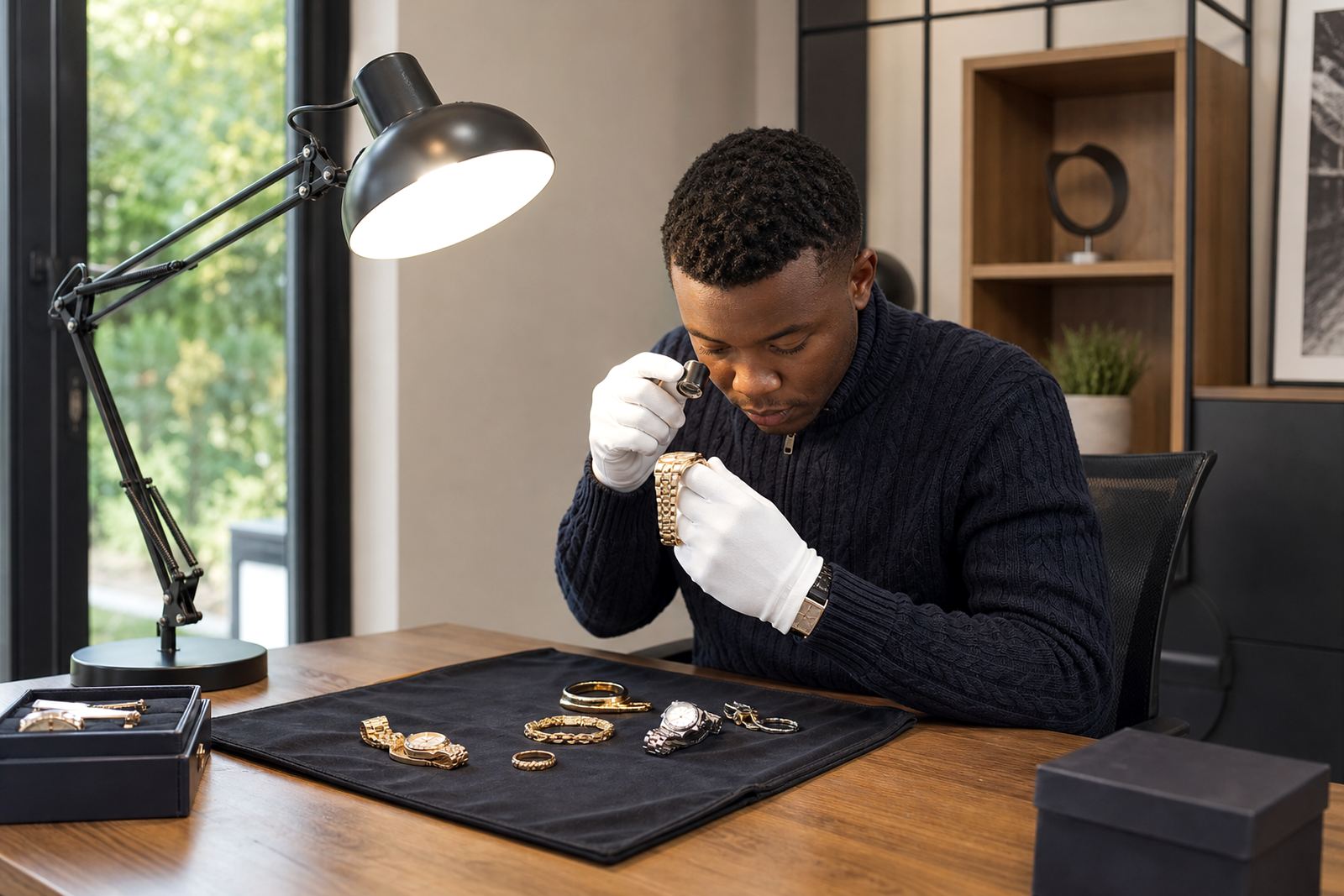
The best trades start before the courier leaves. A buyer should know exactly what is being bought, and the seller should be able to prove what was sent. For watches and jewellery, that means clear photos, a written condition note and a simple agreement on what counts as a correct delivery.
Use plain language. Say whether the item is new, pre-owned, serviced, polished, resized or modified. If the item has stones, state whether any are missing or loose. If there is a box, pouch, links, certificate or manual, list those too. Do not rely on a casual chat message alone, because memories shift once the parcel arrives and the buyer starts checking small details.
- Take photos from the front, back, sides and close-up detail points
- List serial numbers, size, metal type, stone count and visible marks
- Confirm what extras are included, such as boxes, spare links or papers
- Agree on the inspection period and what the buyer may check on arrival
- Keep courier tracking, handover proof and any packing photos
How escrow helps when the item is expensive and easy to dispute
With watches and jewellery, the challenge is often not whether something was sent, but whether it was sent in the agreed condition. Escrow helps by separating payment from delivery. The buyer pays into the secure arrangement first, then the seller ships the item. Once the buyer receives the parcel and confirms that it matches the agreed description, the funds are released.
This structure is useful for online trades, private sales and service-based work linked to valuable items, such as resizing, setting stones or custom alterations. It can also help when the parties are in different cities. A seller in Johannesburg may be trading with a buyer in Durban or Gqeberha, and the item may only be checked after a courier trip and an inspection period.
When choosing any provider, check that it is properly registered for the services it offers. Do not assume every payment arrangement is the same. Ask how funds are held, when release happens, how disputes are handled and what evidence is required if there is a problem. If the process is unclear, pause before you send money.
Common problem points in watch and jewellery trades
Most disputes in this space come from small gaps in the description rather than outright fraud. A seller may have mentioned a missing pin, but the buyer expected a full set. A watch may have been described as water resistant, yet the buyer assumed recent pressure testing. A ring may fit differently after resizing, or a necklace may arrive with a clasp that needs attention.
Condition is just as important as value. Even a light polish can change the appearance of a vintage item, and a loose stone can become a real issue if it was not disclosed. If the trade includes a repair or custom work, be clear on the scope and on any visible marks that may remain afterwards. Incomplete work and scope difference are common reasons people ask for help.
- Wrong item delivered, even if the package was sealed correctly
- Missing accessories such as spare links, certificates or cases
- Condition differences including scratches, dents or stone loss
- Delay in completion of a custom order or repair
- Courier issues that affect the parcel or its contents
From a real deal: Cape Town trade
Consider a buyer in Sandton ordering a pre-owned luxury watch from Cape Town. The seller packs the watch, spare links and papers, then sends photos of the parcel and tracking number. The buyer pays through escrow, so the seller knows the money is secured, and the buyer knows the funds will only move once the item is checked.
On arrival, the buyer inspects the watch against the agreed list. The serial number matches, the bracelet links are there, but one accessory is missing. Instead of an argument, the buyer raises the issue during the inspection period and submits the evidence. The matter can then be assessed against the original agreement, rather than argued from memory. That sort of structure matters in a market where valuable items are small enough to be overlooked and expensive enough to cause stress.
For many people, this is the difference between a smooth trade and days of back and forth. Clear records make the process easier to follow.
Practical steps before you release or receive funds
Before any release happens, both sides should make sure the item, the delivery and the paperwork line up. The buyer should inspect the parcel promptly, while the seller should keep proof of dispatch and item condition. If anything is unclear, raise it within the agreed period and submit clear photos or video where needed.
Keep the process simple and written. If you are selling or buying watches and jewellery online, do not rely on informal promises about condition or accessories. Use a proper item list, a courier method that can be tracked, and a payment structure that keeps the funds on hold until the checks are done. That approach is especially useful for high-value pieces that can be misread from a few phone photos.
TrustIn assists with Delivery Check Support, Item Condition Review, Missing Accessories Help, Wrong Item Support, Incomplete Work Review, Scope Difference Help, Milestone Delay Support, Inspection Period Guidance, Evidence Submission Help, Refund Process Support, Release Query Support and Courier Issue Help. Clients contact us through our contact form for support across South Africa.
A simple rule for safer high-value trades
If a watch or jewellery item is worth enough to cause a proper argument, it is worth documenting properly before anyone pays. Photos, item lists and a clear inspection period protect both sides better than vague promises ever will. Escrow adds a practical layer by holding the funds until delivery is confirmed and the item has been checked against the agreement.
That is the basic rule: clear terms first, payment second, release after confirmation. It is a sensible approach for private sales, online trades and custom work alike. And when there is doubt, it is always better to slow down and verify than to rush a valuable item through on trust alone.