
How Caravan Sale Escrow Works
When a caravan changes hands, the buyer often wants time to inspect the unit and confirm the papers, while the seller wants payment protected before release. Escrow bridges that gap by holding the funds until both sides are satisfied that the agreed handover has taken place. In simple terms, the buyer pays into the escrow arrangement, the caravan is inspected or collected, and the money is released once the agreed conditions are met.
This approach suits private sales, dealer assisted sales and online deals where the parties are in different provinces. It can also help where collection is delayed by courier bookings, roadworthy checks, or final paperwork at a licensing office. If you are comparing providers, check that any escrow service is properly registered and set up to handle payments in line with local requirements.
- Useful when the buyer needs time for an inspection period
- Useful when the seller wants proof of funds before release
- Useful for cross-city sales between Johannesburg, Cape Town, Durban, Pretoria and Gqeberha
Which Caravan Sales It Suits Best
Caravan escrow works well for smaller touring caravans, family caravans, off-road units and larger full-size caravans sold with extra accessories. If the caravan is being sold from Sandton, Randburg or Midrand, or moved across provincial lines, a neutral payment process helps reduce last-minute disputes.
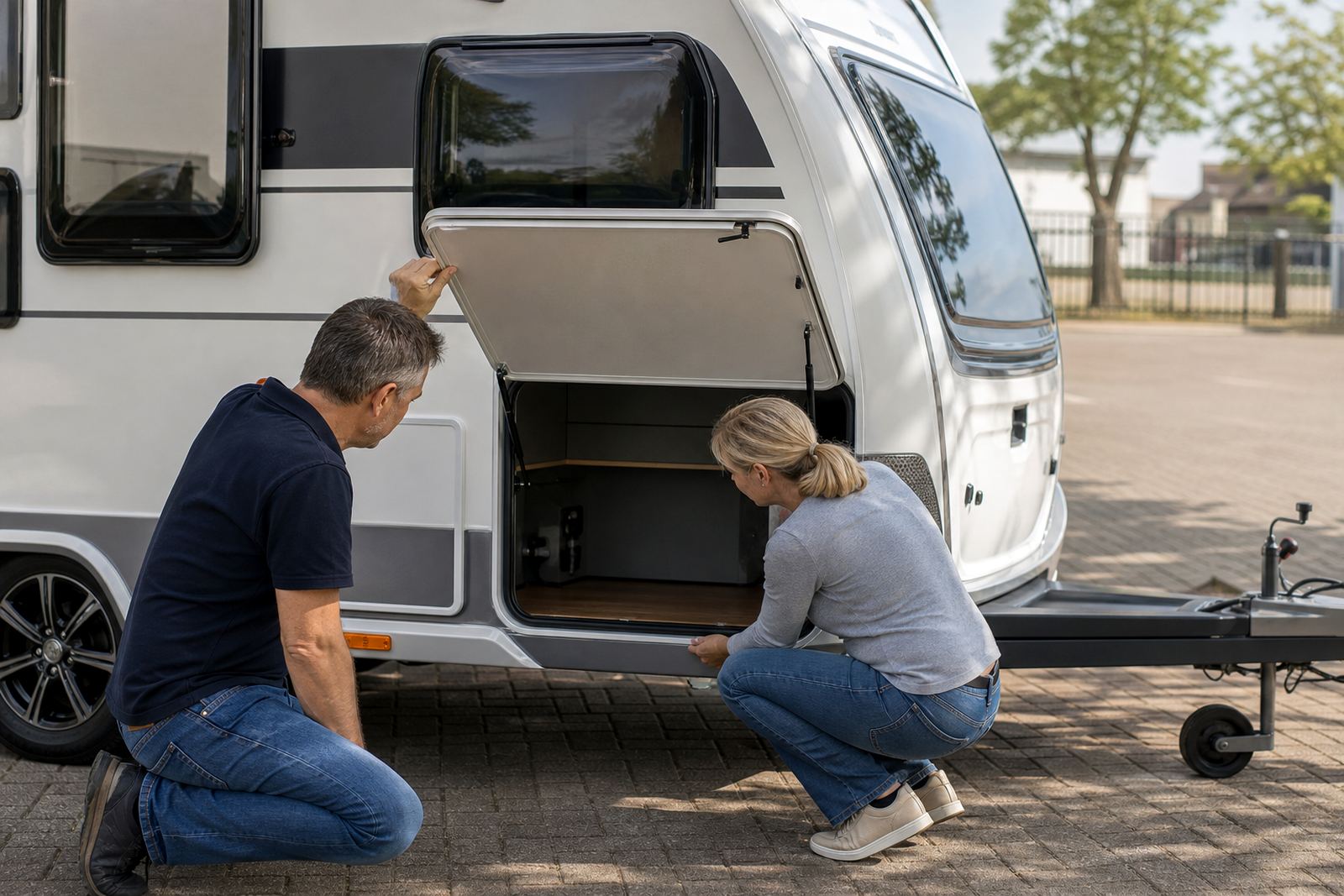
Coastal humidity can affect seals, cupboard hinges and electrical fittings, while inland dust can build up in runners, vents and hatch openings. A proper inspection period helps both sides agree on what was included and what still needs attention.
- Private sales between buyers and sellers in different towns
- Caravans with extras that need item-by-item confirmation
- Sales where the buyer wants an inspection before final release
Before you book an escrow deal
Before using caravan sale escrow, confirm the make, model, year, size and included extras in writing. A buyer should check the body condition, roof seals, window seals, chassis, brakes, tyres, coupling, stabiliser legs and all documentation that applies to the sale.
It is also worth noting whether the caravan will be collected, delivered or inspected at a third location. If a courier or towing service is used, the handover point, loading responsibility and timing should be clear. For most sales, the key point is that both sides agree on what counts as delivery confirmation before the funds are released. That keeps the process practical and avoids misunderstandings later on.
- Check the VIN or chassis number against the paperwork
- Confirm every accessory listed in the sale
- Agree on inspection time and release conditions before payment
Sizes, Options and Typical Caravan Setups
Caravans come in different sizes and layouts, and the escrow process should match the sale terms for the specific unit. A compact two-berth caravan will usually have a simpler handover than a larger family model with bunk beds, a built-in fridge, extra storage and a full kitchen area. Some sales are straightforward collection deals, while others include a longer inspection period because the caravan needs to be checked at home, at a storage yard or after a short test tow.
For buyers and sellers in Johannesburg, Pretoria and surrounding areas, it helps to note the caravan length, tare weight, gross vehicle mass and any towing limits that apply. If the caravan is heading to Cape Town, Durban or Gqeberha, the route and collection plan should be recorded too. That way the service can track the payment stage against the actual handover, not just a promise of handover later.
- Compact caravans for weekend use and lighter towing needs
- Mid-size caravans for family travel and longer stays
- Full-size caravans and off-road units with more accessories and storage
How the escrow steps work
A caravan sale is easier when the unit has been serviced before listing. If the caravan has been standing for a while, the seller should verify that seals have not dried out and that the electrical system is in working order. In many inland areas, dust and heat can affect fittings, while coastal storage may leave corrosion on fasteners and external hardware.
A buyer should never assume a solar panel or battery is part of the deal unless it has been written into the order.
- Inspect seals, hinges and windows for wear or leaks
- Check battery, lighting and mains connections before release
Support For Disputes, Delays And Missing Items
Sometimes a caravan sale runs into a delay because the collection driver is late, the inspection uncovers wear that was not expected, or a loose item is missing from the list. TrustIn supports matters like delivery check support, item condition review, missing accessories help, wrong item support, incomplete work review, scope difference help, milestone delay support and courier issue help. The aim is to keep the payment tied to the agreed handover steps, not to side with one party before the facts are checked.
Keep the documents, photos, messages and inspection notes together if the deal ends in disagreement. Clear evidence makes it easier to work through the release query or refund process support where needed. The service is also useful when the buyer wants inspection period guidance or evidence submission help before confirming release. For any payment service, the best result comes from precise terms at the start and calm records at the end.
- Keep photos of the caravan and all included accessories
- Save collection notes, delivery details and inspection results
- Raise release questions early if the handover is not complete
Deal summary
| Service type | Escrow payment support for caravan sales |
|---|---|
| Use case | Buyer and seller payment protection during inspection and collection |
| Coverage | Available across South Africa, with service in areas such as Sandton, Midrand, Randburg, Bloemfontein, Polokwane and East London |
| Base area | Sandton, Johannesburg |
| Key workflow | Funds held until delivery or collection is confirmed, then released |
| Support channels | Enquiry form on the contact page |