
How smartphone sale escrow works
Smartphone escrow is a simple payment arrangement for a sale where the buyer does not want to release funds before the phone has arrived and been checked. The buyer pays into the escrow flow, the money is held while the device is shipped, and release happens only after delivery is confirmed and the agreed inspection has been completed. That gives the seller confidence that the funds are there, while the buyer gets a proper check before the payout is made.
This is useful for used phones, refurbished handsets, sealed stock and private sales between people in different towns. It suits remote deals between Sandton and Cape Town, Durban and Pretoria, or even a sale sent to Gqeberha by courier. Always check that any provider you use is properly registered and suitable for the type of transaction you are doing.
Which phone deals suit this service best
This service is best for transactions where the device must be received and checked before release. It is a good fit for buyers who are comparing serial numbers, storage size, battery condition and physical appearance against what was advertised. It also suits sellers who want a clear process and less back and forth once the parcel has moved.
- Used smartphones sold by private party
- Refurbished phones with agreed condition notes
- High value flagship models where the buyer wants a full check
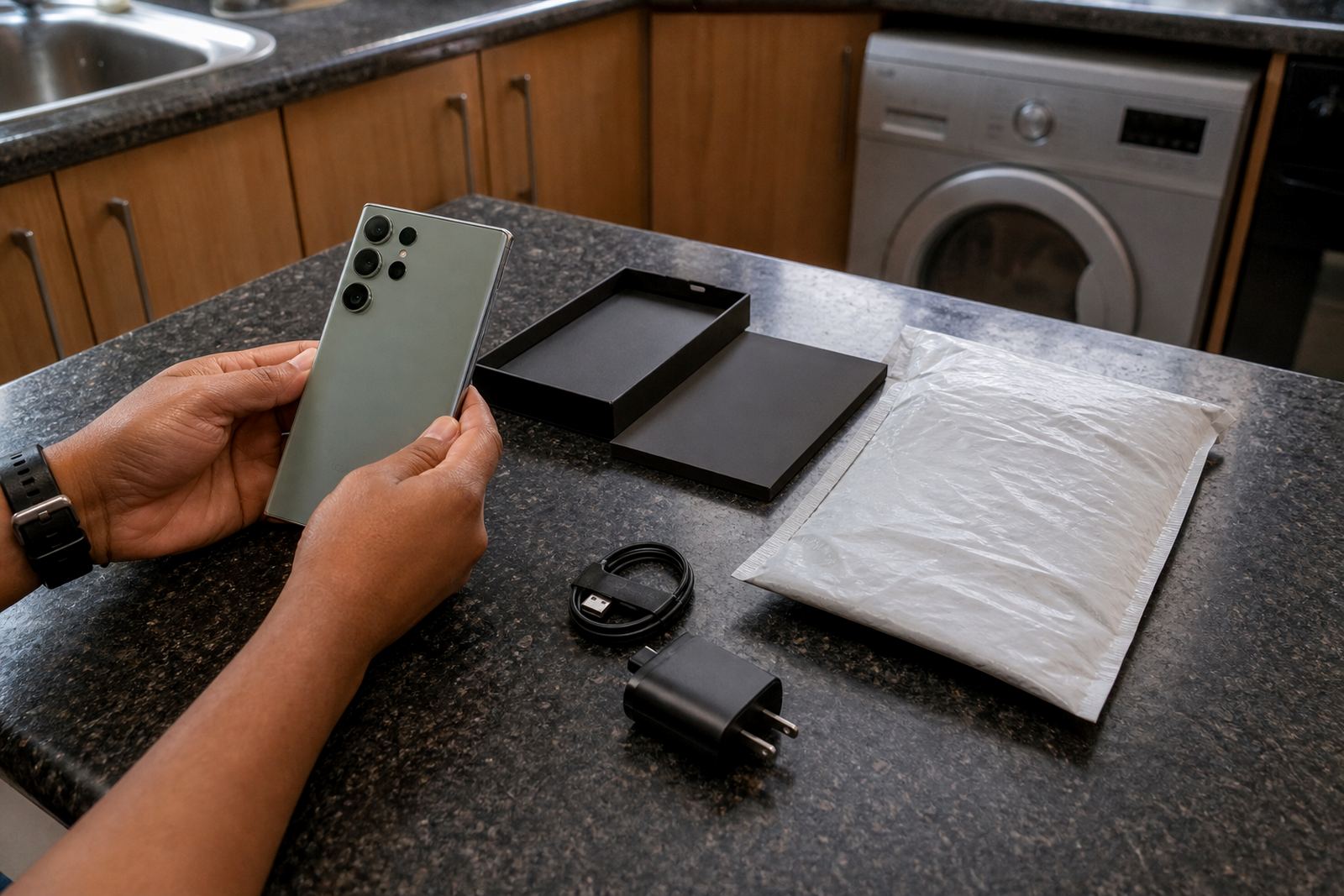
- Bundle sales with charger, cable, box or earbuds
- Cross-city courier sales where the device cannot be inspected in person first
For local handovers in Johannesburg or Pretoria, the same process can still help if the buyer wants time to check the phone after collection. In coastal areas like Cape Town and Durban, it can also help when delivery timing and weather delays affect couriers, especially during heavy rain or wind.
Sizes, options and typical device details
Smartphone escrow is normally arranged around one handset per transaction, but it can also be used for small bundles if the sale is clearly listed. The key point is that the item details must be specific before the payment is held. That includes the make and model, storage size, colour, network status, battery health if known, and whether the phone is new, open box or used.
When ordering, the buyer and seller should agree on the exact condition standard. For example, a 128 GB handset in black with one original cable is not the same as a 256 GB handset with box, charger and case. If there are scratches, repaired parts, a replaced screen, or missing accessories, it should be written down upfront. That avoids dispute over a detail that was never confirmed.
- Storage options commonly listed: 64 GB, 128 GB, 256 GB and 512 GB
- Condition bands: sealed, open box, very good, fair, for parts or repair
- Accessory sets: handset only, handset plus cable, full box set
- Delivery method: courier to door, collection point, or local handover
Where it suits in South Africa
Smartphone escrow suits online trades across South Africa, especially where buyer and seller are in different places and cannot meet face to face. It works well for Johannesburg, Cape Town, Durban, Pretoria and Gqeberha, and also for surrounding areas such as Sandton, Midrand and Randburg. If the phone is valuable or the parties do not know each other, a held payment process can make the deal easier to complete.
A seller in Sandton can pack the device, share the agreed details and send it by courier, while the buyer checks the parcel on arrival. If the phone is being sold into a coastal area, packaging matters because humidity can affect cartons and sealed accessories if they are stored badly before shipping.
For business sellers, the service can support repeat phone sales too, but each transaction still needs the correct item details and release conditions. The buyer should know what counts as a passing check, such as power on, IMEI match, no obvious cracks, and all accessories received as agreed.
Before the device is sent
Good preparation makes the release process much smoother. Before shipment, the seller should remove personal accounts, back up data, and reset the device as agreed. The battery should be charged enough for first power on and testing. If the phone has a SIM tray pin, charger, earphones or box, those items should be counted and packed together so there is no missing item later on.
Buyers should also check the listing carefully before paying. Confirm the exact model, screen size, storage, network lock status and any repair history. If the phone was advertised as excellent condition, ask for the specific marks that would still be acceptable. The more detail that is set upfront, the easier the inspection period becomes.
- Confirm IMEI and serial number before dispatch
- Agree on the inspection period length
- List every accessory and box item
- State whether software resets, repairs or parts replacements were done
- Use tracked delivery where possible
Inspection, release and support points
Once the phone arrives, the buyer checks that it matches the agreed description. That can include powering on, checking the screen, camera, speakers, charging port, battery behaviour, network access and any visible marks. If there is a problem, the buyer should raise it during the inspection period and send clear evidence. If everything matches, the release can proceed and the seller receives the funds.
TrustIn support is built around common transaction points such as delivery check support, item condition review, missing accessories help, wrong item support, incomplete work review, scope difference help, milestone delay support, inspection period guidance, evidence submission help, refund process support, release query support and courier issue help. Those steps are there to keep the process organised when a parcel is delayed or a phone does not match the listing. It is still important that both parties read the terms before paying or shipping.
If you sell phones often, keep a simple record of each listing, the box contents and the inspection date. That habit saves time later and helps avoid confusion if the same buyer orders again.
How the escrow steps work
Smartphones are sensitive to drops, moisture and poor charging habits, so sellers should pack them properly in a rigid box with padding around the device. A phone should never rattle inside the parcel. Buyers should check the outside of the box for damage before opening it, then test the handset in good light and with a charged battery. If the device was stored in a warm room or near coastal air, look for condensation, corrosion or sticky buttons.
When ordering, check the following before you proceed:
- Exact model and storage capacity
- IMEI or serial number matches the listing
- Battery health and charging performance
- Screen condition, touch response and any dead pixels
- Camera, microphone, speakers and buttons
- Network lock status, SIM fit and connectivity
- All accessories, box inserts and paperwork included
If the seller has offered a repair history, ask for that detail in writing. If the phone has been opened for screen or battery work, confirm whether seals, water resistance or factory condition are affected. That kind of check is especially important on higher value models. A careful order note now is usually better than a dispute later, and it keeps the handover straightforward for both sides.
Deal summary
| Transaction type | Escrow for smartphone sales between buyer and seller |
|---|---|
| Typical use | Used, refurbished, open box and private phone sales |
| Release trigger | Funds released after delivery is confirmed and inspection passes |
| Common inspection points | Model match, IMEI, screen, battery, camera, accessories |
| Suitable regions | Johannesburg, Sandton, Cape Town, Durban, Pretoria, Gqeberha |
| Service access | Clients enquire through the contact page form |