
How livestock trade escrow works
Escrow is a simple payment hold arrangement. The buyer pays into the escrow account, the funds are kept until the agreed delivery or inspection step is completed, then the payment is released to the seller. It gives both sides a clear process when livestock is being moved between farms, auction points, holding yards or private properties, and it helps reduce payment disputes when animals arrive late, differ from the order, or need to be counted again on site.
This service suits cattle, sheep, goats, pigs and other lawful livestock sale arrangements where the parties want documented release steps. TrustIn does not give personal financial, tax or legal advice, so each party should check the sale terms, transport terms and any permits that may apply. Buyers and sellers should also check that any provider they use is properly registered, and that the release rules are written down before any payment is sent.
When this product suits the sale
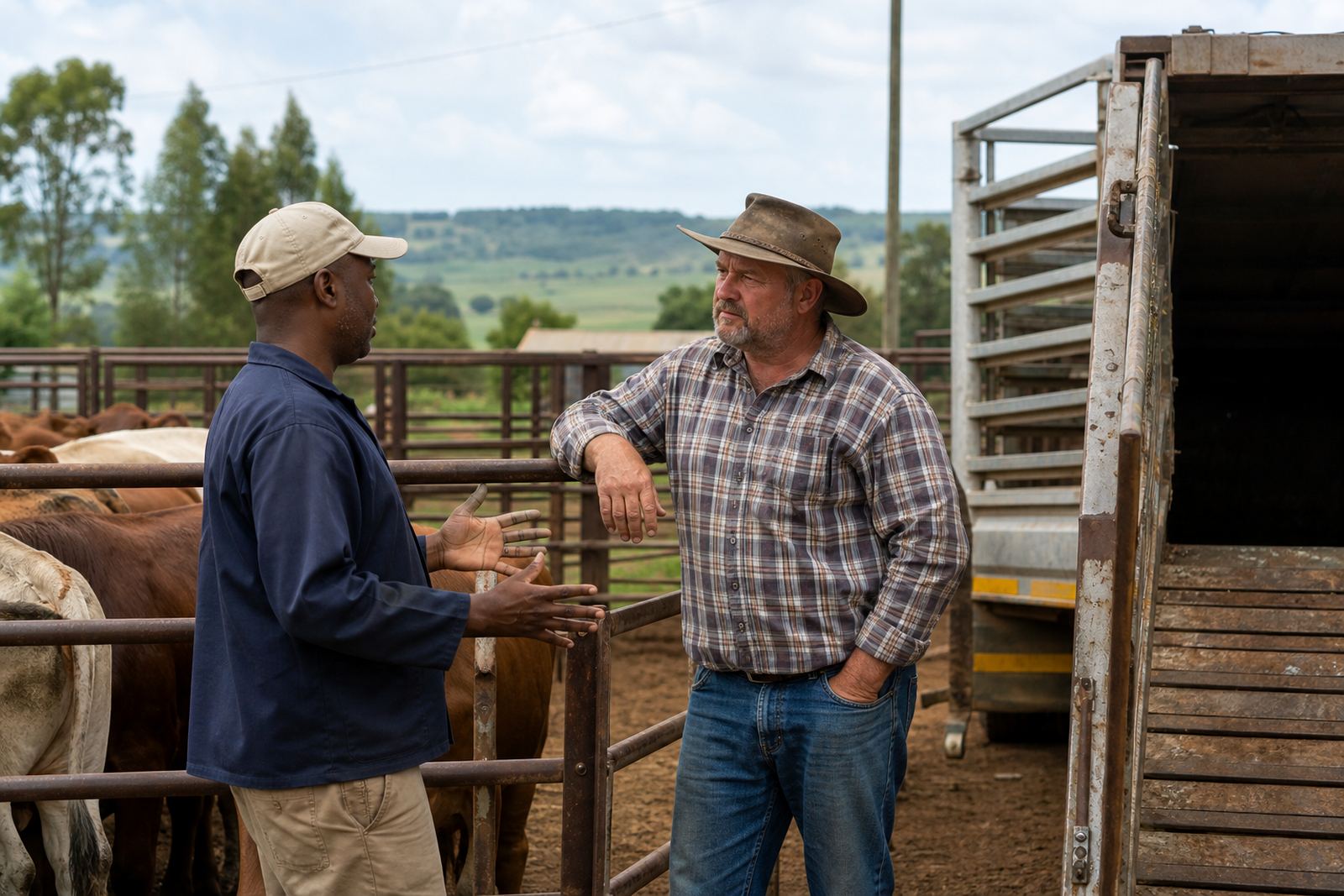
Livestock escrow works best where value, timing and condition all matter. It can help where stock is sold between provinces, where a buyer cannot inspect on the day of payment, or where part of the order is being delivered in stages. It also suits private treaty sales, online listings, and brokered deals where the parties want a neutral payment step before livestock changes hands.
- Sales where delivery is planned for a later date
- Orders that need count verification or tag checks on arrival
- Deals with a short inspection window after handover
- Milestone-based payments for staged delivery or collection
- Cross-city trade between Johannesburg, Pretoria, Durban, Cape Town and Gqeberha
For smaller local movements in Sandton, Randburg or Midrand, the process can be kept very simple. For longer trips, especially where humidity, heat or transport delays may affect welfare, the release step should match the real handover point not just the dispatch time.
Sizes, options and release settings
Escrow is not a one-size-fits-all arrangement. The right setup depends on the number of animals, the value of the sale, the transport plan and how the parties want release to work. A single-batch sale of a few head of cattle does not need the same release structure as a multi-stop sheep consignment or an order with a deposit, balance and final inspection step.
Common options include full payment hold until delivery is confirmed, staged release after partial delivery, or release after a defined inspection period. Some parties want release when the buyer confirms receipt, while others prefer release only after an itemised count and condition check. For livestock this matters because count, age, sex, condition and matching paperwork may all affect the final acceptance. Clear instructions up front save time later, and fewer calls back and forth.
- Single release: full payment released after delivery confirmation
- Split release: part released on dispatch, balance after arrival
- Inspection release: funds held during a set check period
- Documented release: release after required proof is submitted
Before you book an escrow deal
Before using any escrow arrangement for livestock, check the sale agreement line by line. The order should say exactly what is being sold, the number of animals, expected condition, delivery location, who pays transport, and what proof is needed before release. If the animals are being moved across municipal or provincial lines, make sure the transport and health documents are in order, and confirm who is responsible if a consignment is delayed en route.
It helps to have clear photos, tag numbers, a count sheet, and any supporting documents ready before payment is made. If the deal includes accessories such as crates, feed, handling gear or loading assistance, list those items as well. Missing details cause trouble later. A buyer should know what counts as a shortfall, while the seller should know what evidence will be accepted if there is a dispute.
- Exact stock count and description
- Pickup or delivery point with date and time
- Inspection period and acceptance rules
- Transport responsibility and handover point
- Required proof for release or refund support
Care, movement and practical handling notes
Livestock trade has moving parts beyond the payment itself. If animals are standing for a long time in heat, or travelling through wet weather, the condition on arrival may differ from the loading point. That is why the release process should fit the delivery plan. For example, a buyer in Gqeberha may want a short inspection window after arrival, while a buyer in Pretoria may need more time if the stock is arriving from a rural area with limited network coverage.
When the order depends on third-party transport, ask who carries the risk during loading, transit and unloading. If feed, water or rest periods are needed, include that in the sale notes. It is better to agree these details upfront than sort them out after the animals have already moved.
Support with disputes, evidence and release queries
If something does not match the order, both parties should keep evidence together and submit it through the agreed support process. Useful proof can include photos, tag records, delivery notes, chat history and signed handover documents. TrustIn supports issues such as wrong item support, incomplete work review, courier issue help, evidence submission help, refund process support and release query support. For livestock trade, the most common points are count differences, delivery delays and acceptance questions after inspection.
Our support team works from the Sandton base with help for Johannesburg, Cape Town, Durban, Pretoria, Gqeberha, Midrand and Randburg. The team includes Thabo Arendse, with support from Naledi Phiri, Aiden Naidoo, Lerato Mashaba, Megan van der Merwe, Reneilwe Hadebe and Jason Mkhize. For an escrow deal, write to TrustIn through the contact page form with your item, price and the other party, and we use that route for all service queries and case follow-up.
Deal summary
| Service type | Online escrow payment service for buyer and seller trade |
|---|---|
| Use case | Livestock sale arrangements with delivery confirmation before release |
| Coverage | Across South Africa, from Johannesburg to Cape Town, Durban, Pretoria and Gqeberha |
| Base | Sandton, Johannesburg |
| Support areas | Sandton, Johannesburg, Cape Town, Durban, Pretoria, Gqeberha, Midrand, Randburg |