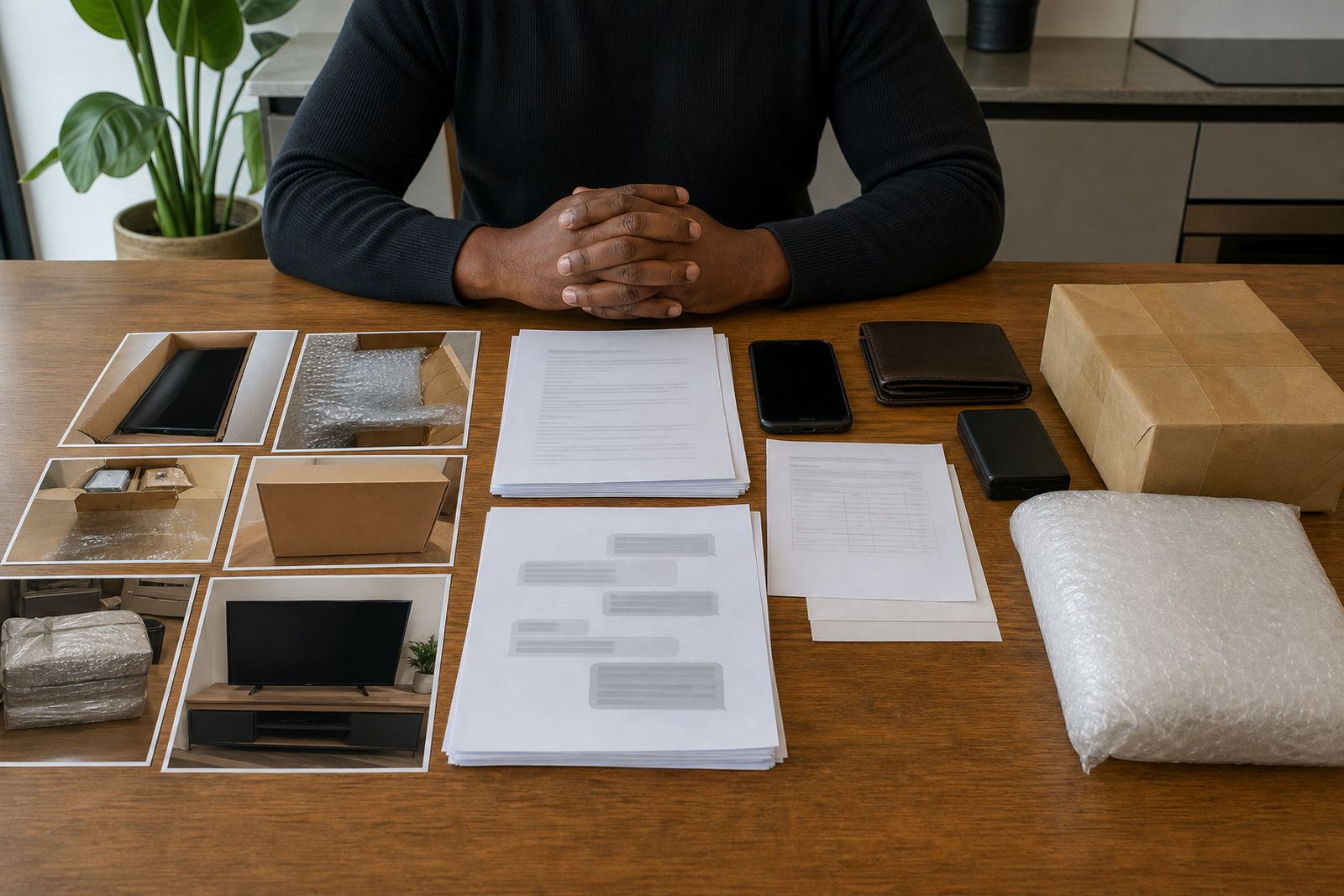


Start the inspection before you sign anything off
Open the package or review the delivered work as soon as it is safe to do so, then compare it against the original order, messages and item description. In an escrow payment, funds are usually held until the buyer confirms delivery and the goods or service have been checked, so the inspection stage matters.
Work in good light and keep the packaging close by in case you need batch numbers, courier labels or product codes. If the item arrived after a hot day in Durban, or sat in a courier van through Gauteng traffic, check for heat damage, damp marks or crushed corners first.
- Confirm the item, size, colour and quantity.
- Check the condition of the outer packaging before opening.
- Keep all inserts, labels and loose parts together.
- Do not discard anything until the inspection is complete.
Use a simple check order for the item itself
Go from the outside in. First check whether the main item matches what was agreed. Then test the parts that can be checked without delay, such as switches, zips, hinges, screens, fittings or connections. If it is a service deliverable, compare the final result with the scope, milestones and any signed-off notes.
A careful check does not need to be rushed. Many disputes start because a buyer only notices a missing cable, damaged corner or incomplete section after the inspection period has ended.
- Look for scratches, dents, chips, stains or water marks.
- Check that all listed accessories are present.
- Test basic functions where possible.
- Compare the delivery against the agreed scope or order note.
If something looks wrong, stop using the item if further use could make the issue worse. For example, do not keep powering on a faulty electronic item if it is overheating or making an unusual smell.
What to photograph and note right away
Good evidence is clear, dated and specific. Take photos of the item from several angles, then photograph any visible fault close-up and in context. If the issue is with a service, save the final file, screenshot the problem area, or note the exact section that does not match the brief.
Write down what you found while it is still fresh. Use plain facts rather than assumptions. Say what is missing, what is damaged, what was tested, and what happened when you tested it. This helps support teams assess the matter faster and with less back and forth.
- Photograph packaging, labels and seals before opening.
- Take clear close-ups of faults and wider shots for context.
- Save chat messages, invoices, delivery notes and order confirmations.
- Record the date and time of the inspection.
For buyers in Cape Town, Pretoria or Gqeberha, it can help to keep a single folder with every file linked to the transaction. That way, if the courier says a parcel was delivered in good condition, you still have your own record ready.
How to spot missing parts, wrong items and scope gaps
Not every problem is a broken item. Sometimes the order is simply incomplete, the wrong model was sent, or the work delivered does not match the agreed scope. In those cases, the right approach is to identify exactly where the difference is and what was expected instead.
For physical goods, check model numbers, sizes, serials, colours and accessory lists. For services, compare the deliverable against the brief, milestone notes and acceptance criteria. If a seller agreed to supply three components and only two arrived, say so plainly. If a designer delivered the wrong format, note the format requested and the one received.
- Wrong item: model, size or version does not match the order.
- Missing accessories: cable, charger, manual, fitting or spare part absent.
- Incomplete work: part of the agreed task was not finished.
- Scope difference: the delivered result does not match the written brief.
When you report the issue, keep the note short and factual. Clear wording often speeds up the next step.
Use the inspection period properly
The inspection period is there so the buyer can check the delivery before release of funds. Do the check within the stated time, and do not leave it until the last hour if you can avoid it. If a package arrived after business hours, make time the next morning to inspect it properly.
Some issues only show up after a basic test. For example, a device may power on but have a weak battery, a seized port or a cracked component under the casing. A service may open correctly but still miss an agreed deliverable. Make notes as you go, and if there is a fault, raise it before the period ends.
If you are unsure whether something counts as a valid issue, ask support for guidance on the process rather than guessing. TrustIn provides delivery check support, inspection period guidance and release query support for transactions across Johannesburg, Sandton, Midrand, Randburg, Pretoria, Durban, Cape Town and Gqeberha.
When to ask for help and what to send
If the item is damaged, incomplete, wrong or not as described, send your evidence and a short written summary through the enquiry form on the contact page. Include what was expected, what was received, and what you have already checked. If the matter involves a courier problem, note any delivery delay, visible parcel damage or missing parcel details too.
Our team can help buyers and sellers work through item condition review, missing accessories help, wrong item support, incomplete work review, scope difference help, milestone delay support and evidence submission help. The goal is to keep the matter clear enough for the next step, whether that means more information, a correction or the usual release process.
- State the issue in one or two sentences.
- Attach photos, screenshots or file copies.
- Note the order reference and inspection date.
- Keep the original packaging if the matter may need further review.
Before using any escrow provider, check that it is properly registered and suitable for your transaction. If a matter becomes disputed, use the process written into the transaction terms and keep all communication in one place.