
Why private car sales need a tighter payment process
Buying or selling a car privately in South Africa often happens through a quick message, a viewing in a parking lot, and a transfer that feels rushed. That is where problems start. A buyer wants to know the vehicle is genuine, the logbook details are in order, and the keys and papers will be handed over. The seller wants to know the money is real before letting the car go.
Escrow helps reduce that pressure. Instead of the buyer paying the seller directly and hoping for the best, the money is held until both sides confirm the agreed delivery steps are done. For a private sale in Sandton, Johannesburg, or even a cross city deal between Cape Town and Pretoria, that extra control can save a lot of trouble.
It is not a cure for every risk in a car sale, and it does not remove the need to inspect the vehicle properly. It does however give the transaction a clear sequence, which matters when people do not know each other and the amounts involved are large.
How escrow works in a vehicle deal
The basic process is simple. The buyer and seller agree on the vehicle, price, delivery point, and what must be included in the handover. The buyer then pays into the escrow service rather than directly to the seller. The funds are held while the car is delivered and checked. Once the buyer confirms that the agreed vehicle, keys and documents have been received, the money is released.
For private car sales, the key is to define the handover clearly before payment is made. If the vehicle is in Johannesburg and the buyer is in Durban, the parties should agree on who arranges transport, when inspection happens, and what happens if the car arrives with a problem. A vague agreement creates arguments later.
- Set the exact vehicle details, including make, model, year, colour, registration number and VIN where relevant.
- Confirm what is included, such as spare keys, service records, alarm remotes, wheel spanner and jack.
- Agree on the inspection period and who pays courier or transport costs.
- Write down when release happens, for example after physical handover and document checks.
That structure helps both buyer and seller stay on the same page, especially when one side is in a hurry.
What to check before paying or releasing a car
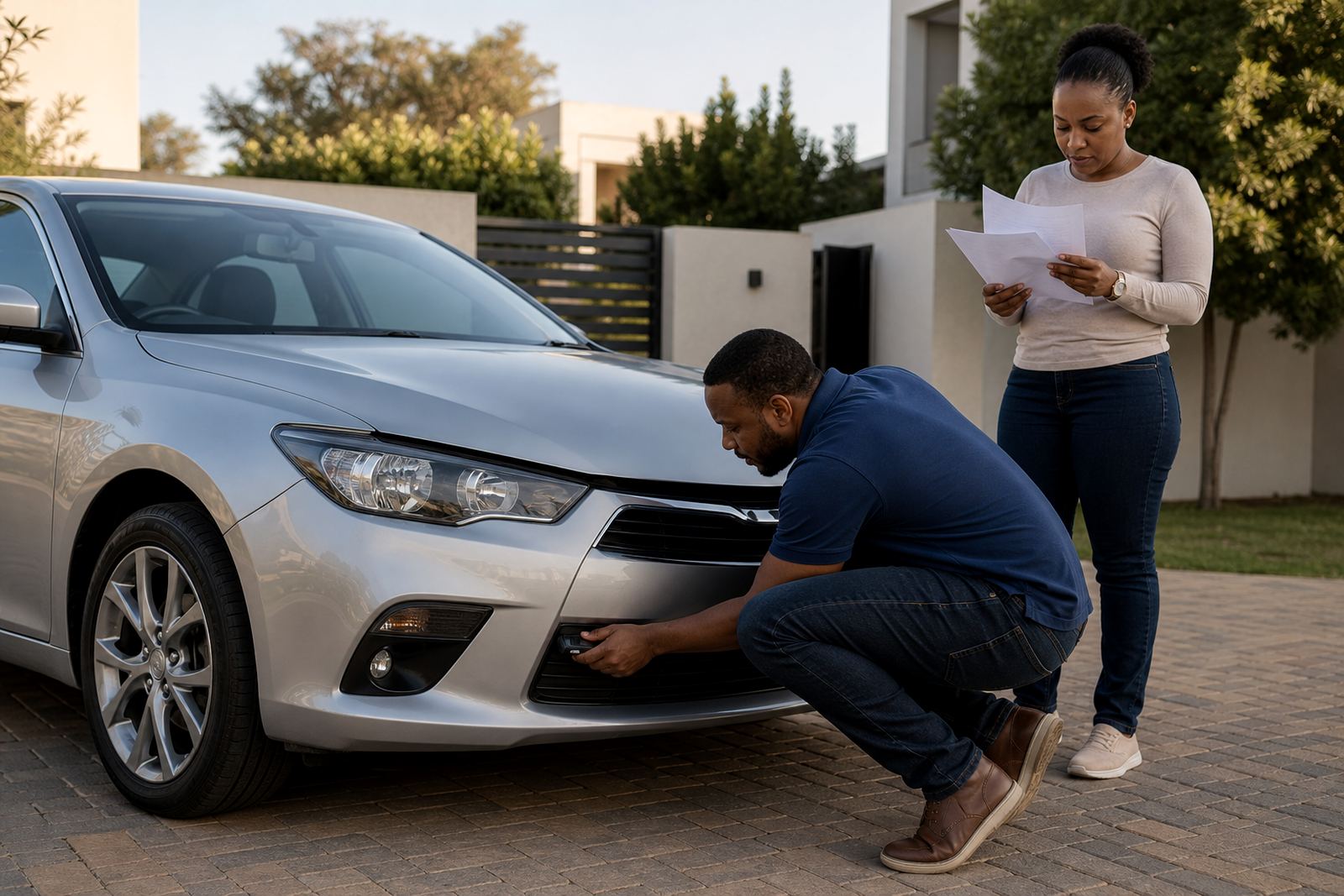
Escrow supports the payment side of the deal, but it does not replace vehicle checks. A private seller should be ready to show the car in daylight and answer basic questions about its condition. A buyer should inspect for accident damage, dashboard warning lights, mismatched panels, tyre wear, fluid leaks and any signs of tampering. If the car is sold in coastal towns like Cape Town or Gqeberha, look closely for rust and moisture damage, especially around seals and underbody areas.
Before the money is released, both sides should also confirm the paperwork. The car should match the paperwork, and the seller should be able to provide the documents agreed in the sale. If there is a finance settlement or outstanding issue, that must be handled before release. Do not leave this to a verbal promise made after payment.
- Check that the car starts cold and drives properly, not just for a short loop round the block.
- Test lights, windows, indicators, brakes and air conditioning.
- Compare the odometer reading with the condition of the interior and service history.
- Take photos of the vehicle at handover from several angles, including the dashboard and mileage.
In a dispute, good photos and written notes are far more useful than a heated phone call.
Common private-sale problems escrow can help reduce
Private car deals often run into the same few issues. The buyer may send payment and then the seller delays delivery. The seller may hand over the car, then wait too long for the money to clear. Sometimes the car arrives with missing accessories, or the buyer finds that the vehicle is not as described. Escrow does not remove these disputes, but it gives a process for handling them instead of forcing one side to trust the other blindly.
When the transaction is handled properly, the buyer can raise concerns during the inspection period, and the seller can respond with the agreed facts. That is much easier than trying to sort out a misunderstanding after money has already moved and the car is gone.
TrustIn supports this type of practical transaction flow through enquiry based support, with service coverage for Johannesburg, Cape Town, Durban, Pretoria and Gqeberha, as well as Sandton, Midrand and Randburg. The focus is on simple release steps, clear evidence submission, and support when a courier or handover issue comes up.
Anyone using an escrow provider should still check that the provider is properly registered and suitable for the transaction. That matters just as much as the price of the car.
Funds held for a Sandton to Durban sale
Picture a seller in Sandton listing a used hatchback and a buyer in Durban who has only seen photos and a video call. The buyer wants certainty before booking a transporter. The seller wants payment protection before the car leaves Gauteng. The two agree on a set inspection period after delivery, and the buyer pays into escrow. Once the transporter delivers the car and the buyer checks that the agreed items are present, the funds are released.
That process works best when both sides stay practical. The seller should keep the car available for inspection until the handover is complete. The buyer should not stretch the inspection beyond what was agreed. If there is a missing item or an issue with condition, it should be reported straight away with photos and a clear note of what is wrong.
How to keep the handover orderly
The cleaner the handover, the fewer disputes later. A private car sale should not depend on memory alone. Make a short checklist and tick it off at the collection point. If the car is being handed over after hours, use a well lit public place and make sure both parties can inspect the vehicle properly before release. In areas with municipal parking rules or security access controls, plan the meeting place ahead of time so nobody is rushed.
Keep the communication plain and specific. Say what is being handed over, who is collecting it, and what counts as acceptance. If the buyer needs time to verify the car at a workshop, that should be agreed before the money is locked in. If the seller wants no delay once the vehicle is delivered, that too should be stated clearly. It keeps expectations aligned, which is half the battle.
- Agree the handover location and time in writing.
- Confirm who will inspect the car on arrival.
- Record any missing accessory, mark or fault before release.
- Do not rely on informal promises after the vehicle has changed hands.
With a used car, details matter. A small mistake in the agreement can become a big one once the vehicle has driven away.
The real value of escrow in a private car sale
Escrow is useful because it slows the transaction down just enough for both sides to check what they are actually getting. It does not replace common sense, proper inspection, or good records. What it does is create a fairer middle step between payment and handover, which is often exactly what a private car sale needs.
If you are selling a vehicle or buying one from a private owner, look at the deal in plain terms: who holds the money, what must be delivered, when the release happens, and what happens if something is missing. Get those points sorted before anyone pays a cent. And before using any provider, check that it is properly registered and appropriate for the type of transaction you are doing.
That is the practical way to keep a private car sale safer, especially when the buyer and seller are in different cities and want a clean outcome.